Save 20% on all supplements

Spinach Facts
Learn how spinach boosts health and why moderation matters due to oxalates.


Spinach Health Benefits & Warnings
Eat Spinach, Fuel Your Body—Just Don’t Overdo It!
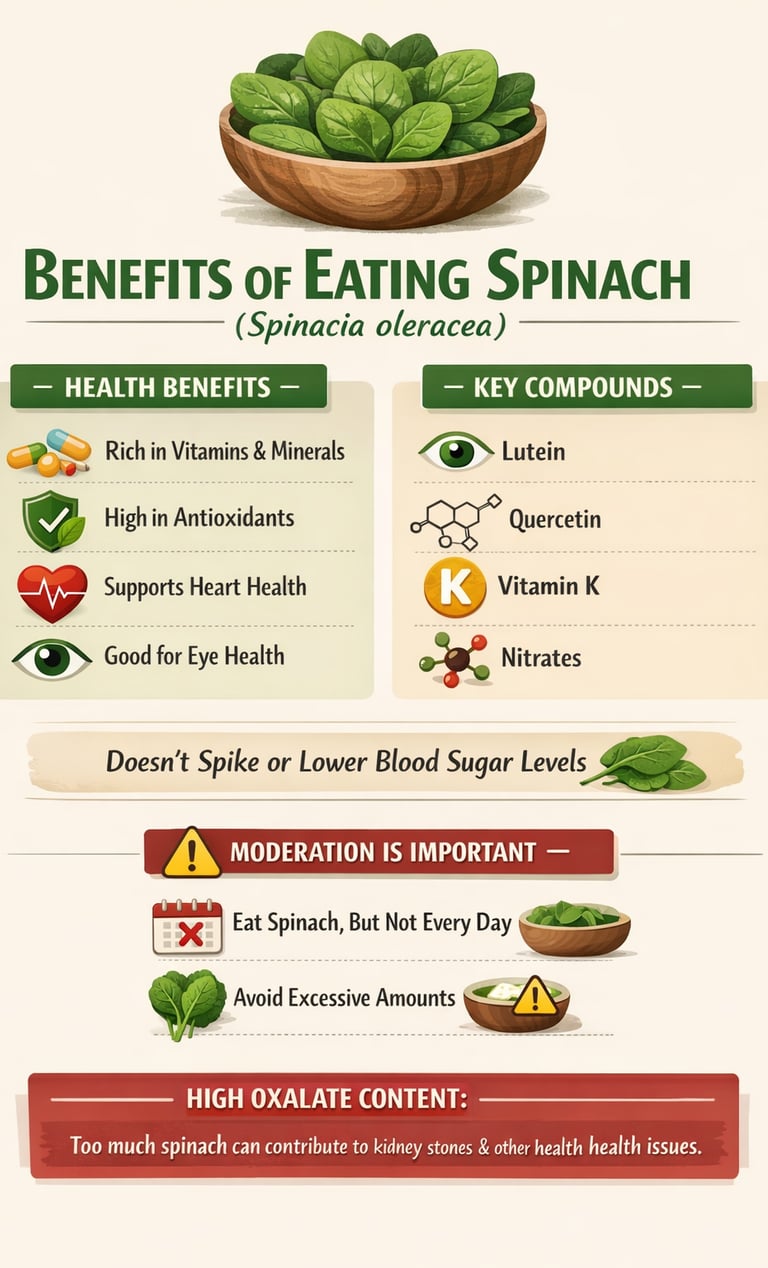
Benefits of Eating Spinach (Spinacia oleracea)
Spinach (Spinacia oleracea) is a nutrient-rich leafy green packed with vitamins, minerals, and bioactive compounds that promote overall health.
Supports Eye Health – Spinach contains lutein and zeaxanthin, carotenoids that accumulate in the retina and help protect against age-related macular degeneration and cataracts.
Strengthens Bones – High in vitamin K1, calcium, and magnesium, spinach supports bone density and proper blood clotting.
Anti-inflammatory Effects – Compounds like flavonoids, kaempferol, and quercetin reduce inflammation and oxidative stress in the body.
Promotes Heart Health – The nitrates in spinach improve blood flow and support healthy blood pressure.
Blood Sugar Neutral – Spinach is very low in carbohydrates and has a minimal glycemic effect, meaning it does not spike blood sugar nor significantly lower it.
Rich in Antioxidants – Vitamin C, beta-carotene, and polyphenols help neutralize harmful free radicals, protecting cells from damage.
Supports Brain Health – Folate and vitamin K contribute to cognitive function and may reduce age-related cognitive decline.
Important Cautions
Moderation is crucial: Spinach contains oxalates, which in large amounts can contribute to kidney stones or interfere with calcium absorption. Avoid consuming very large amounts daily.
Cooking helps: Lightly steaming or boiling spinach reduces oxalate content, making it safer for more frequent consumption.
Spinach (Spinacia oleracea) is a powerful superfood that delivers numerous health benefits without affecting blood sugar levels, as long as it’s eaten in moderation and as part of a balanced diet.
Spinach Disclaimer
The information provided about spinach (Spinacia oleracea) is for general educational purposes only and is not intended as medical advice. While spinach is a nutrient-rich leafy green containing beneficial compounds such as vitamins A, C, K, folate, iron, magnesium, and antioxidants like lutein and beta-carotene, individual responses may vary.
Cautions:
Spinach contains oxalates, which can contribute to kidney stone formation if consumed in excessive amounts. It is recommended not to eat large quantities of spinach every day.
Spinach does not significantly raise or lower blood sugar, but individuals with specific medical conditions, such as kidney disease or blood clotting disorders, should consult a healthcare professional before increasing spinach intake.
Always wash spinach thoroughly before consumption to reduce the risk of contamination.
Use of this information is at your own risk. For personalized dietary advice, please consult a qualified healthcare provider or nutritionist.
FAQs
What are benefits?
Spinach is packed with vitamins, minerals, and antioxidants that support your overall health.
Why limit spinach?
Because spinach contains oxalates, eating too much daily can increase the risk of kidney stones.
How much is safe daily?
A moderate serving, such as one cup of cooked spinach or two cups raw, is generally safe for most people.
Can I eat spinach daily?
Yes, but keep portions moderate and vary your greens to avoid oxalate buildup.
Who should avoid it?
People with kidney stone history or certain health conditions should limit spinach intake.
Does cooking affect oxalate levels?
Yes, cooking spinach reduces oxalate content somewhat, making it easier on the body than raw spinach.
Nature's Life Enhancer
A Natural Approach to Supporting Cellular Health
Contact
Newsletter
info@natureslifeenhancer.com
09184291989
The content provided on this website by Nature’s Life Enhancer is intended for general informational purposes only and should not be considered a substitute for professional medical advice, diagnosis, or treatment. If you have, or believe you may have, any sensitivities, allergies, or underlying skin or health conditions, we strongly encourage you to seek guidance from a qualified healthcare provider or licensed dermatologist before using any of our products.
Nature’s Life Enhancer assumes no responsibility or liability for any individual reactions to specific ingredients. As a precaution, we highly recommend performing an allergy patch test prior to full use. Should any adverse reaction occur, discontinue use immediately and consult a healthcare professional.
Please note that the information presented on this website has not been evaluated or approved by the Food and Drug Administration (FDA).
Results may vary from person to person based on individual health conditions, lifestyle habits, and dietary choices. Testimonials and results shared on this website reflect the experiences of select individuals and are not intended to guarantee or imply similar outcomes for others.
Always consult your physician before making changes to your diet or beginning any new nutrition, health, or exercise program. Products offered by Nature’s Life Enhancer are not intended to diagnose, treat, cure, or prevent any disease.
All information provided on this website is for informational purposes only and should not replace professional medical advice. Statements made regarding our products have not been evaluated by the Food and Drug Administration.
lotlotvale1@gmail.om
Angelo Rosaroso Vale Jr.
Cristian Alcantara
09773666697 or 09539945053
Return Policy


© 2026. All rights reserved.